LITERARY ANALYSIS 1

|
1984 Lit Analysis.doc Size : 0.065 Kb Type : doc |
LITERARY ANALYSIS 2
|
|
House on Mango Lit Analysis.doc Size : 0.059 Kb Type : doc |
LITERARY ANALYSIS 3
|
|
Red Badge Lit Analysis.doc Size : 0.069 Kb Type : doc |
LITERARY ANALYSIS 4
|
|
Dorian Gray Lit Analysis.doc Size : 0.093 Kb Type : doc |
LITERARY ANALYSIS 5
|
|
The Dead Lit Analysis.doc Size : 0.086 Kb Type : doc |
LITERARY ANALYSIS 6 *Critique this one!*
|
|
Taming of the Shrew Lit Analysis.doc Size : 0.424 Kb Type : doc |
LITERARY ANALYSIS 7
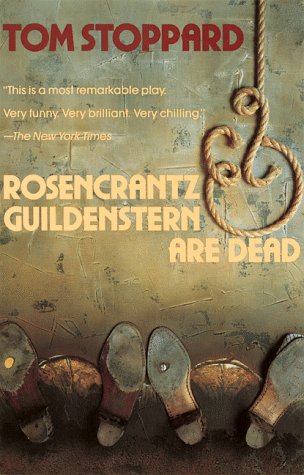
Rosencrantz & Guildenstern Are Dead
By: Tom Stoppard

LITERARY DEVICES/FIGURATIVE LANGUAGE:
Syllogism- Act 1 pg. 16: "One, he has never known anything like it. Two, he has never known anything to write home about. Three, it is nothing to write home about." -This quote exemplifies Guildenstern's analytical tone he possesses throughout the chapter, which helps develop the overall tone of the story by characterizing him as the intelligent and inquisitive thinker of the pair.
Dialogue- Act 1 pg. 17: "The scientific approach to the examination of phenomena is a defence against the pure emotion of fear." -This philosophy quoted by Guildenstern reinforces the analytical tone he possesses, while further contributing to the story's characterization by allowing readers to view both thought processes of Rosencrantz & Guildenstern.
Chiasmus- Act 1 pg. 33: "I can do you blood and love without the rhetoric and I can do you blood and rhetoric without the love." -This quote from The Player explains his methods of performing but also demonstrates his abilities in acting, contributing to the characterization of the novel by showcasing the myriad of talents characters in Hamlet's time had.
Rhetorical Question- Act 1 pg. 39: "The only beginning is birth and the only end is death. If you can't count on that, what can you count on?" -Guildenstern becomes annoyed with Rosencrantz's inability to perceive things on his level of thinking. He exemplifies this frustration by ending an ongoing discussion about life and death with a rhetorical question to portray his dominance in intelligence, contributing to the novel's characterization by showing that the characters, although immensely intelligent, cannot cope with others who are not as smart as themselves.
Symbolism- Act 2 pg. 94: Autumn (nearing death; growing old)
Brown (humility; poverty)
-These two symbols conceived by Guildenstern upon the boat to England foreshadows their deaths. He implies to Rosencrantz that "brown is creeping up on us" which exemplifies their decline into eventual extinction. This contributes to the gloomy mood of the novel near the end as it conveys thoughts that both characters did not want to succumb to.
Tone:
Rosencrantz & Guildenstern Are Dead supports three main tones: analytical, witty, and gloomy. Throughout much of the beginning, Guildenstern exemplifies a philosophical thought process as he provides intelligent and often profound explanations on various aspects of life, exemplified in this discussion with Rosencrantz concerning one’s curiosity: “the scientific approach to the examination of phenomena is a defence against the pure emotion of fear” (act 1, pg. 17). The character of Rosencrantz exemplifies a witty tone through his conversations with the king, and The Player. During the falling action of the story, both characters exhibit a gloomy tone as they reflect upon their progress in life and as Guildenstern puts it, “the brownness of autumn,” implying their deaths.
Mood:
Rosencrantz & Guildenstern Are
Dead creates an
indifferent and rather restless mood throughout much of the story. Readers may
find the excess use of stichomythia between Rosencrantz & Guildenstern unnecessary,
such as in act one when Rosencrantz and Guildenstern are flipping a coin in the
wilderness and Guildenstern comments on alternate universes (pg. 17). As a
result of statements such as these made between the two characters, many
readers may become restless as they try to read past the long dialogues and
attempt to comprehend the meaning of the plot.
The novel displays a central theme with both character’s inability to make decisions. Rosencrantz & Guildenstern hint that their fates conflict with their decision process as exemplified in act one when they were in the wilderness figuring out what their task was to do. The inability to decide developed in act two when Claudius gave orders to escort Hamlet to England for his death. The pair wanted to obey the king, but at the same time, they did not want to see their childhood friend die. The author portrays Rosencrantz & Guildenstern as individually smart, but collectively indecisive. They both have outstanding qualities to themselves, but their lack of confidence in their decisions eventually leads to their downfall in the end.
Character Deconstruction:
Although Rosencrantz & Guildenstern Are Dead presents two protagonists, for the purpose of this deconstruction, the character of Guildenstern will be analyzed. Guildenstern is the intelligent and inquisitive character, often philosophizing what should be simple answers, such as in act one when he and Rosencrantz are playing a coin toss. He bases his losing on the theory of alternate universes, rather than just accepting his faults. In addition to providing scholarly solutions to common day situations, Guildenstern also utilizes rhetorical questions within conversations with Rosencrantz. In act one, he rudely criticizes Rosencrantz for not being able to accept the outcomes of life and death and rhetorically asks: “the only beginning is birth and the only end is death. If you can't count on that, what can you count on? Guildenstern remains a static character throughout the novel, remaining analytical all the way till his death.
Plot Perspective:
Rosencrantz & Guildenstern Are Dead is presented in a third person limited omniscient point of view. The story is seen through the eyes of the protagonists but narrated through an outside observer. This perspective fosters illusions of reality while allowing for outside comments, such as stage directions or introductory comments. The view also adds a level of intimacy between the characters and the reader.
